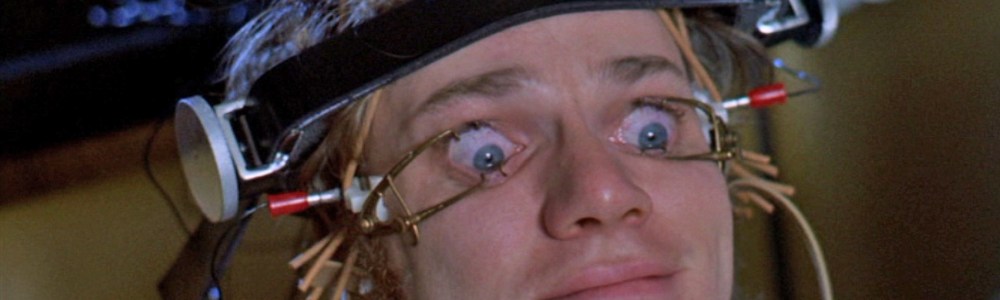
Stop trying to make me watch Game Of Thrones!

Stop trying to make me watch Game Of Thrones. Just stop. You’re wasting your time because I promise you, I am NEVER going to watch Game Of Thrones

I don’t care how incredible it is. It’s irrelevant to me whether it’s actually way more than just a show about ridiculously-named hairy guys hanging out with dragons, wolves and naked women. It makes no difference how many million people tweeted about its celestial amazingness during the season 8 opening episode. I don’t even care that the guy who writes it looks like Santa Claus. I’m never going to watch Game Of Thrones.
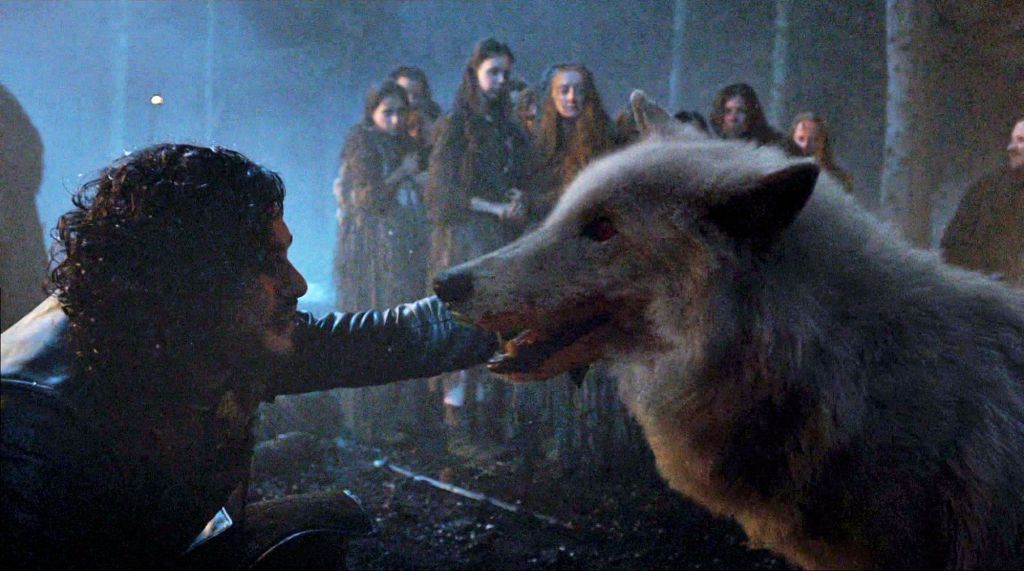
Way more than just a show about hairy guys hanging out with wolves

Believe me, it’s got nothing to do with a lack of time in my life. Over the last few years, for example, I’ve somehow found the hours to rewatch every episode of ‘Allo ‘Allo (actually amazing). I’ve even willingly wasted what must amount to days on terrible reality shows like Big Brother, I’m A Celebrity and even Love After LockUp (also actually amazing). According to the internet, it would take two days, 15 hours and 30 minutes to watch all 67 pre-season 8 episodes of GOT. Coincidentally, that’s exactly the same amount of time it would take not to watch all 67 pre-season 8 episodes of GOT. Which is what I’m going to do.

Let’s get one thing straight, I can honestly say my refusal to watch isn’t snobbery. That should be clear from the shows mentioned above. And there are many people I respect and admire who are confirmed GOT addicts. They insist it’s way more than just a show about ridiculously-named hairy guys, dragons, wolves, naked women etc. They tell me regularly I should definitely, definitely watch Game Of Thrones. I tell them regularly I’m definitely, definitely not going to watch Game Of Thrones.
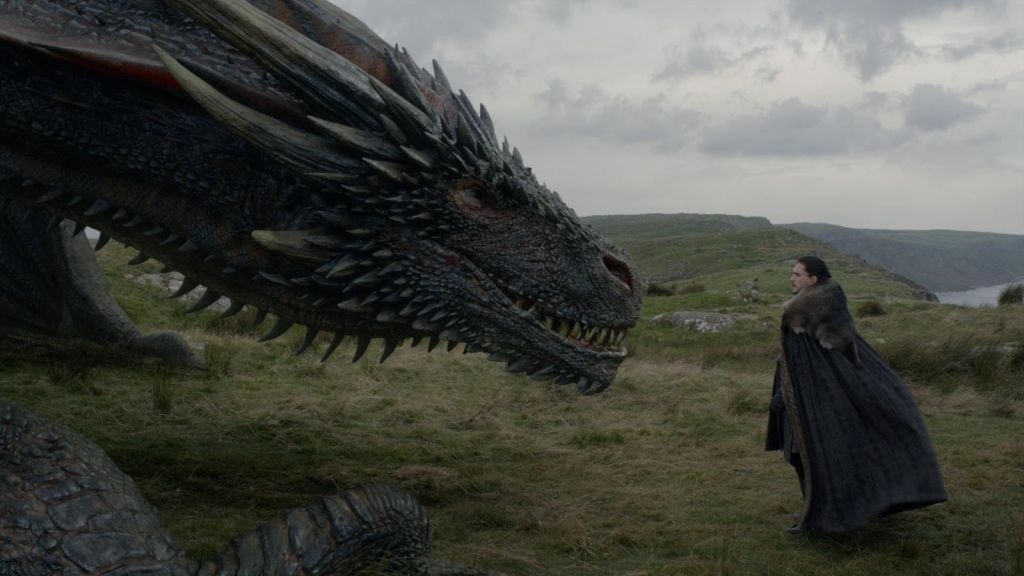
Way more than just a show about hairy guys hanging out with dragons

Unfortunately, though, it’s almost inescapable. The first email I received this morning was from a PR announcing that the season 8 premiere has been the most-talked about GOT episode of all time. Apparently 3,857,823 tweets were posted discussing it. Good, that’s fantastic, it’s nice that people are passionate about stuff. But guess what? I’m passionate about not watching Game Of Thrones.

Two years ago, around the time HBO started defecating season seven all over the cultural landscape, I was so fed up with the constant Throning on Twitter that I found myself trying to block it by adding several variations of the show’s title into the muted words section of my account. I put in all the combinations and hashtags I could imagine. It didn’t work. In fact, just now I logged onto Twitter, hit the search icon and the main story under the ‘For you’ tab was some guff about a GOT character called Cersei! Below that, the first item on the ‘What’s happening’ list was a link to a bunch of GOT memes. ‘What’s happening’, Twitter? I’ll tell you what’s not happening, Twitter – I’m not watching Game Of Thrones.

Even in the real world Game Of Thrones is taking over. Quite apart from the inevitable ads and promotional campaigns that prod you towards watching, pubs are showing season 8 episodes live. Restaurants are creating themed menus. In the US, there’s been season 8 marketing collaborations between GOT and products as varied as Bud Light, Urban Decay, Johnnie Walker whisky, Oreo cookies and Adidas, who are cashing in with some limited edition trainers. And it’s all working because I’m totally planning not to drink Bud Light, eat Oreos or slap on some Urban Decay while I don’t watch Game Of Thrones

Obviously, none of this is Game Of Thrones’ fault. I realise it’s my problem. After all, how can so many millions of people be wrong? It’s Ed Sheeran’s favourite show, for Christ’s sake! He even appeared in an episode – and obviously what the world needs right now is more Ed Sheeran. 

GOT x Ed = me not watching GOT

Yes, I repeat, none of this is the show’s fault. After a period of self-analysis (two days, 15 hours and 30 minutes, to be precise), I’ve come to the conclusion that it’s the lazy assumption the whole world is watching GOT that really bothers me, rather than the show itself. The way almost every so called news website seems to think we’re all eager to have an endless jet of GOT-related content vomited into our brain-buckets via our screen-fried eyeballs.

And there’s so much of it! ‘The 38 times Jon Snow wasn’t really dead’, ‘The 12 ways the GOT opening credits might have predicted the Notre Dame fire’, ‘The one really naughty swear word you can make using just four letters from the name Sandor “The Hound” Clegane’, ‘The 27 best games that aren’t Game of Thrones’, ‘A list of 16 famous thrones’… It really is relentless, like you’re being beaten into submission by a sword-wielding hairy man riding a naked wolf. But incredibly, almost magically, the onslaught only hardens my almost spiritual resolve not to watch Game Of Thrones.
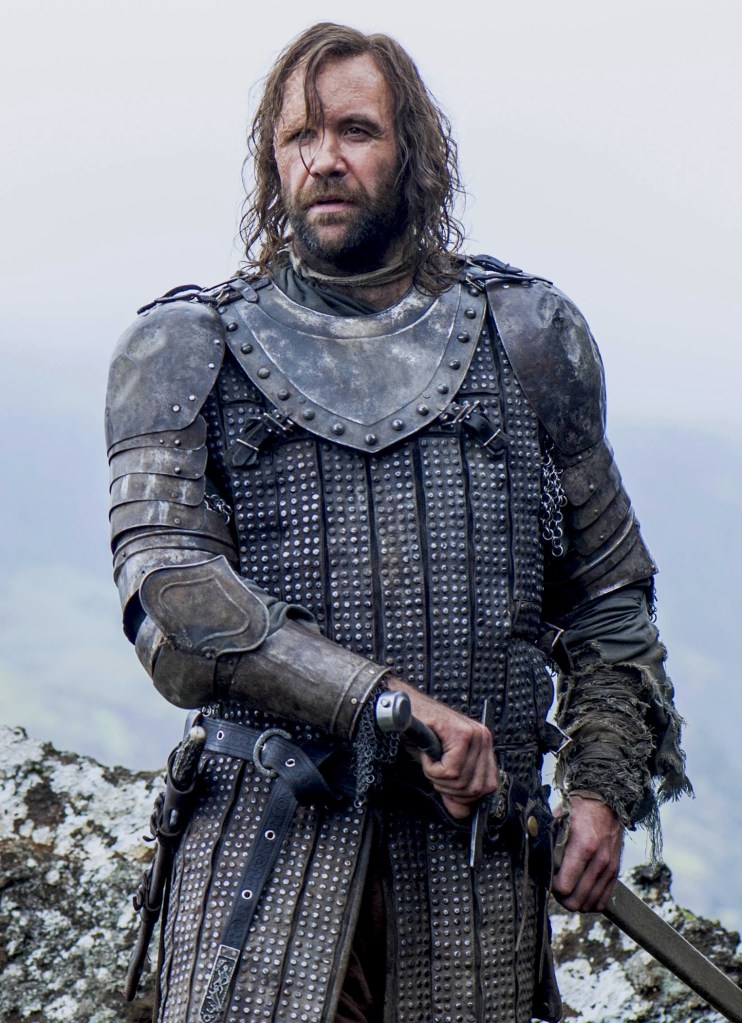
Sandor ‘The Hound’ Clegane, yesterday

Yes, obviously I recognise the sky scraping irony in complaining about GOT saturation while throwing more Throne-dung at the i-wall but this is what I’ve been driven to. It’s cathartic. And until doctors find a cure for GOT, it’s all I’ve got. All I’ve GOT… Got/GOT. See, it’s everywhere! Even the English language is turning against me.

I’m still not going to watch it, though.

Simon’s X Factor plan smells strictly of success

You might not have noticed but Simon Cowell’s been in the news a little lately, talking about the future of The X Factor. Ah, The X Factor… Now, I don’t want to sound like some tragic Brexiteer nostalgist but there was a time, in the not too distant past, when The X Factor was #GreatTV. A time when families up and down the land would gather round the TV of a Saturday night, desperate to know what Leona would be singing, what Wagner would be wearing and which contestant judge Louis Walsh would compare to “a little Lenny Henry”. 

Sadly, that time is long gone. Last year’s X Factor averaged ratings of just 5 million per episode, a far cry from the staggering 17 million it achieved during its 2010 zenith – aka the year One Direction only managed to finish third, the big losers. Tellingly, no one remembers who actually won last year’s series. Not even last year’s winner.

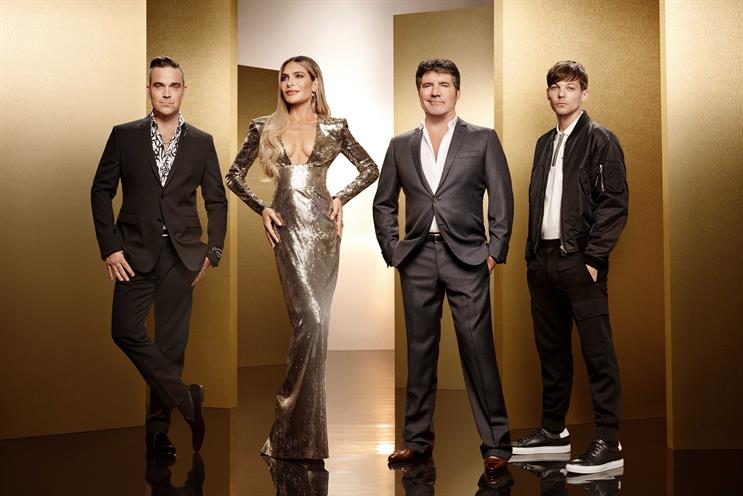
There are many reasons for the show’s decline, too many to speculate on here. But it surely didn’t help that the 2018 judging panel included Robbie Williams, alongside Robbie Williams’ wife. What was Simon Cowell thinking? Imagine putting someone with no musical credibility whatsoever on the panel, alongside Robbie Williams’ wife. 

The 2018 judging line up… inspiring stuff

Crucially, The X Factor’s dip in fortunes has meant that, for the last few years, it’s been obliterated in the ratings by its Saturday night rival Strictly Come Dancing. It genuinely must have hurt Simon that viewers* were turning their backs on his show. It must have stung to know that the nation would rather watch someone from Casualty do Contemporary than listen to him get the basics of percentages so badly wrong on a weekly basis. 

One thing’s clear, however: Simon is one million per cent not a quitter (apart from the time he quit so he could launch The X Factor in the US, installing Gary Barlow as his replacement on the panel and effectively heralding the show’s decline). Ok, so Simon’s sometimes a quitter – but this isn’t one of those times, right? He may be stuck in a rut fashion-wise – those deep Vs and tent-like, super-confusing men’s boyfriend jeans now appear to have actually become his top layer of skin – but it’s clear he’s not afraid to shake up his show to entice viewers* to return. 

A deliciously deep v and his go-to leg tents…

So, what’s Simon’s latest genius idea to give The X Factor its, erm, X factor back? How does he plan to wrestle the Saturday night crown from Strictly’s spray-tanned hands? Simple: by turning The X Factor into Strictly Come Singing. Because, let’s not kid anyone, that’s exactly what his heavily rumoured celebrity version of The X Factor is. 

And do you know what? It might just work. Ok, he busted that move once before, in 2006, and it wasn’t a hit – but back then the main show was in its prime, so a spin off starring such legends as Chris Moyles, Gillian McKeith and James Hewitt was unnecessary. Now, the situation is critical, The X Factor has all but expired. 

One of the reasons The X Factor originally succeeded was because it was all about the singers. Back in 2004, few people really cared who those three so called experts (Cowell, Walsh and Sharon Osbourne) on the panel actually were. It didn’t matter. What mattered was the talented unknown singers and their passionate performances. 

But then Simon started getting greedy, adding judges – established, talented pop stars, and Cheryl Cole – and engineering feuds and fallouts on the panel. Inevitably attention started to stray from the contestants. And you know what? The moment the press starts speculating on what outfits the judges will be wearing (Simon not included: deep Vs etc), and not the contestants, you know the jig’s up. 

But, if Simon manages to book the right celebrity line up then the attention could once again turn to those screeching away on stage, rather than the four or five, or perhaps even six, ego maniacs sat out front on the judging panel. 

And then – (Leonard Cohen’s) hallelujah – the viewers* will ditch the dance floor and surely come flooding back. 

*advertisers

After Life: Ricky strikes the right balance

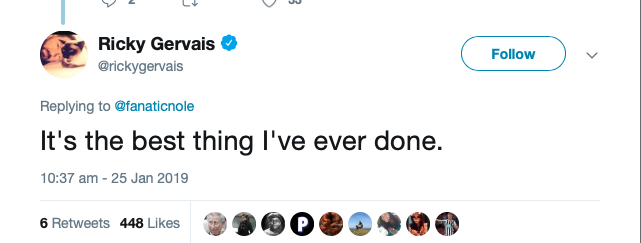
The hype machine has been in danger of overheating these last few weeks, channelling all its efforts into making sure the world is aware that Ricky Gervais has a new series, After Life, streaming on Netflix. Ricky, meanwhile, has spaffed a few more gallons of gas into the machine’s fuel tank by insisting that the show’s the best thing he’s done. Well, he was never going to say it’s a steaming pile of Lee Mack, was he? 

Regardless, it’s fighting talk from the man behind such genre game-changers as The Office and Extras. But is he right? Is this his masterpiece? In a word, no. Still, you’ve got to admire the way Gervais balances the brutal with the broad while telling the story of angry, suicidal widower Tony. As the likes of The Fall and Rise of Reginald Perrin, BoJack Horseman and arguably even I’m Alan Partridge have shown, it’s not impossible to find dark but relatable humour in subjects like grief, suicide and depression, but it’s a tough trick to pull off.

And After Life really is broad. The setting is a quiet English coastal town, with the kind of blue skies that only exist in childhood memories and a glorious stretch of sand within moping distance. Ok, there seems to be a mugging problem that the local coppers need to get a handle on sharpish, but it’s hardly Broadchurch. The supporting characters, meanwhile, are so accepting of the appalling way Tony treats them that, at certain points, you’d forgiven for wondering if the show is eventually going to reveal itself as some kind of weird, British seaside version of Westworld.

Here’s what it feels like: you know how Hollyoaks sometimes does a grown up and gritty late night spin off, in which all the regular characters are suddenly swearing and swigging meths inside strip clubs? Well, imagine if Doc Martin, with its idyllic location and grumpy Martin Clunes combo, did the same. Imagine the mildly misanthropic eponymous GP being supercharged into an out of hours, gin-soaked, smack-smoking megabastard. Imagine that and you won’t be a million miles from the tone of After Life. By the way, who wouldn’t want to watch that version of Doc Martin?

The humour itself is also a blend of the malicious and the mainstream. On the one hand you have Tony viciously tearing into friends and strangers alike – his insistence that a 93-year-old victim of one of those previously mentioned muggings couldn’t be scarred for life because of her age, is a highlight. On the other, the gently absurd stories that Tony chases in his job as a local journalist affectionately poke fun at the idiosyncrasies of small town life and just about manage to avoid being patronising.

Away from the laughs, After Life is, of course, a show about pain – Tony’s emotional and existential pain, mainly. However, it’s also about the backside-clenching pain experienced by viewers whenever Tony drops one of his hurtful truth bombs, or truthful hurt bombs – either works.

Gervais, as we know, has a talent for that. Remember the bit in The Office’s Christmas special when irritating, pregnant Anne is verbally taken down by one of the guys from the warehouse, after she complains about him smoking near her? Well, After Life is filled with similar tough-to-watch moments. Except, in this case, it’s even tougher because, while Anne was a wholly unsympathetic character, the victims of Tony’s nihilistic fury rarely deserve it.

Understandably, when the balancing act between broad and brutal is so precarious, you can’t expect to pull it off every time. The way Tony treats drug dependent Julian [Tim Plester] – and the lack of any real repercussion for his actions – feels almost insanely misjudged. And Tony’s handling of the bullying of his young nephew isn’t far behind. Both are simply swept under the forgiving carpet of the show’s ending.

Talking of which, some reviewers have complained that After Life’s climax is mawkish and sickly sweet. Certainly, as Tony’s pain eases and poignancy takes over, the schmaltz arrives by the lorry load. And his realisation that there’s nothing wrong with wishing happiness for good people is hardly revolutionary. But hey, perhaps in divisive times, such simple and, yes, broad messages manage to carry a little more weight.

After Life is streaming now on Netflix. Main pic credit: Natalie Seery.

How To Disappear Incompletely: Geoffrey Household’s Rogue Male

This year marks the 80th anniversary of Geoffrey Household’s classic 1939 novel Rogue Male, a tense and taut thriller complete with failed assassinations, desperate escapes, a relentless pursuit, psychological trauma and a hero who spends much of the book’s second half literally hiding like a hunted animal in a hole in the ground. Not sure 007’s ever had to do that.

Briefly put, it’s the tale of an unnamed British adventurer who comes within a hair’s breadth of assassinating an anonymous European dictator (Household later admitted it was meant to be Hitler), before he’s apprehended by the authorities. Despite being tortured and left for dead, he manages to stage a miraculous escape back to England. But, with his enemies still on his trail, he realises he’s no safer on British soil than he was on the continent – and so he attempts to disappear from the face of the Earth, and into the earth.

While the book owes a debt to the more widely known The Thirty-Nine Steps and Riddle Of The Sands, for me Rogue Male is easily their equal. It stands up to repeat reads, thanks to a perfectly judged mix of pursuit and paranoia and the almost cartoon-like stiff upper lip and self possession of the hero, which gradually begins to crack under the pressure of the manhunt. 

But it’s the literal escapism at the heart of the novel that provides its greatest appeal. The more firmly that surveillance and social media take hold of 21st century life, the stronger Rogue Male tightens its grip on the imagination. As anyone who’s watched Channel 4’s Hunted will know, try dropping off the radar in 2019 and you’ll be lucky to get beyond the end of your road before a helicopter swoops down and Peter Bleksley leaps out and body-slams you to the ground. Fortunately for Household’s hero, he exists in a time where going off grid, whether through choice or necessity, is a more realistic proposition.

That’s not to say he finds it easy. In fact, despite living in the CCTV and mobile phone-free Britain of 1939, it’s impossible for him to disappear completely. And, even though he takes that drastic step of holing up in a sandstone burrow somewhere in deepest Dorset, he’s still not quite able to give his nemesis, dogged, oily undercover hitman Major Quive-Smith, the slip. 

Of course, the poor guy’s not helped early on by the whacking great bandage he has around his head – a result of the nasty, Nazi-flavoured roughing up he receives at the start of the story. And his decision to make some of his escape on a laughably conspicuous, homemade aluminium tandem bike, complete with its own sidecar-slash-pram, seems a little misguided. Still, being a resourceful sort, he makes a decent fist of vanishing for a while and possibly would have got away with it indefinitely if it hadn’t have been for that pesky post-mistress who recognises him from a description circulated by the police. 

I won’t spoil the plot any further, not least because it seems Rogue Male will soon get another chance to emerge again from its own cultural hiding place. Three years ago it was announced that Benedict Cumberbatch is set to star in a new film version, although at time of writing the project appears still to be in production. It won’t be the first time the book’s been adapted, however. Just two years after publication it made its first leap to the big screen, in the shape of Fritz Lang’s 1941 movie Manhunt. And, in 1976, the book was turned into an underwhelming BBC TV film, starring the legend that is Peter O’Toole. 

Peter O’Toole does his best in the Beeb’s underwhelming 1976 adaptation

With any luck you won’t have need to spend a few weeks living in a dank, dark vault dug into the side of an ancient holloway anytime soon. But if you do, make sure you have a copy of Rogue Male to hand. The hours will fly by!